
Halifax County Probate Office
Probate in Halifax County is handled by the Clerk of Superior Court at the Halifax County Courthouse. North Carolina Judicial Branch estate materials state that elected clerks and assistant clerks hold most estate hearings and preside over most estate cases. That means Halifax County estate files are court records, but they are managed through the clerk's estate function rather than through a separate probate court.
The same office also supports public terminals, paper file review, estate copy requests, and filing help for court forms. If a will's validity is challenged through a caveat, the matter may move before a Superior Court judge. For routine estate administration, small estate filings, summary administration, year's allowance, and probate of a will, the clerk's estate process is the main local access point.
Estates / Probate before the Clerk of Superior Court
Halifax County Courthouse
357 Ferrell Lane
Halifax, NC 27839
252-593-3000
Monday-Friday, 8:30 a.m.-5:00 p.m.
Halifax County Probate Terms
Estate files use terms that can be plain once tied to the record. These definitions help separate a will filing from a full estate case, and they also explain why some records stay with the clerk while other disputes move to Superior Court.
- Testator
- The person who made a will before death.
- Executor
- The person named in a will to handle estate duties after appointment.
- Intestate
- A death without a valid will, so estate property passes under state law.
- Guardianship
- A court-supervised arrangement for a minor or adult who needs a legally appointed guardian.
- Conservatorship
- A property-focused protective role. North Carolina materials often use guardianship language for similar protective estate duties.
- Caveat
- A formal challenge to a will's validity that may be heard by a Superior Court judge.
Search Halifax County Probate Records
Basic Halifax County estate case information may be searched through the North Carolina eCourts Portal, using Smart Search and county filters when available. Public self-service terminals in clerk offices also search civil, special proceeding, and estate information. The full paper estate file remains with the clerk in the county where the estate is administered, so older filings, documents not displayed online, certified copies, and file inspection should be handled through the Halifax Clerk of Superior Court.
- Start with the decedent's full name, estate case number if known, and the county where the estate is being administered.
- Use Portal Smart Search for estate or special proceeding case information, then narrow results to Halifax County if statewide matches appear.
- Use a public terminal or the clerk's counter for full paper file review, certified copies, older files, or records that are not visible online.
- For a new estate, ask the clerk which path fits the facts: full administration, summary administration, small estate affidavit, year's allowance, or probate of will only.
The North Carolina Judicial Branch forms index is one source for estate forms used in Halifax County probate matters.
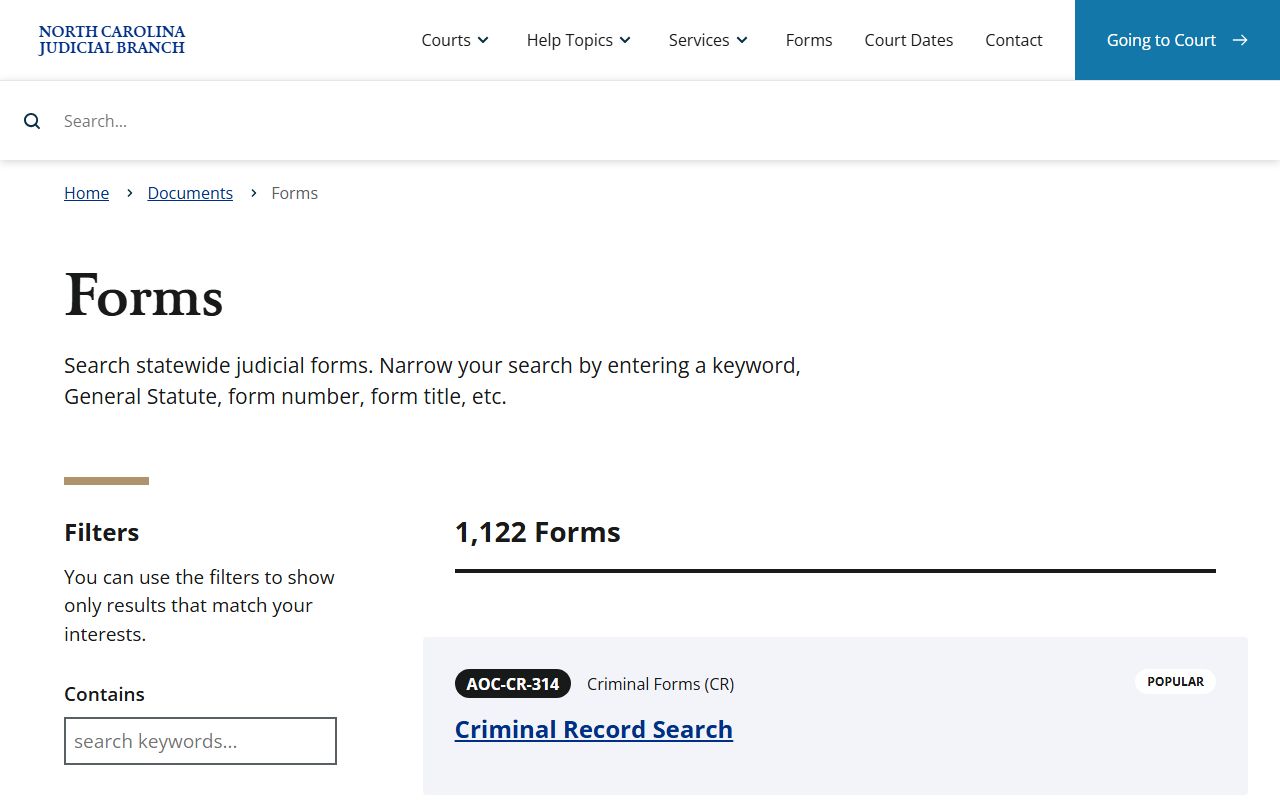
The forms index matters because Halifax County estate filings use statewide AOC forms, not a locally invented packet.
Halifax County Estate Forms
Probate records often start with a form that tells the clerk what kind of estate action is being requested. The research file identified several AOC estate forms tied to probate of wills and small estate collection. These forms can become part of the Halifax County probate file once filed and accepted.
| Form | Probate Use | Fields or Purpose |
|---|---|---|
| AOC-E-301 | Probate of will or codicil | Affidavit of subscribing witnesses or notary-as-attesting-witness affidavit. |
| AOC-E-302 | Witnesses unavailable | Affidavits used when subscribing witnesses cannot be produced. |
| AOC-E-304 | Holographic will | Affidavits for probate of a handwritten will. |
| AOC-E-306 | Certificate of probate | Certificate showing probate action on the will. |
| AOC-E-203B | Small estate collection | Affiant identity, relationship, heirs or devisees, addresses, and statement that at least thirty days have passed since death. |
eCourts Guide & File is also listed for probate paths such as year's allowance, summary administration, and small estate administration. A form choice should match the estate facts, because the wrong path can delay letters, notices, inventory filing, or closing.
Halifax County Probate Fees
Probate fees in Halifax County follow statewide North Carolina court cost schedules. The research file confirmed that the Judicial Branch current court-costs page links the Estates Court Costs 2026 schedule, but local PDF text extraction was not available during research. Exact dollar amounts should be verified from that current statewide PDF or with the Clerk of Superior Court before filing.
| Probate Item | Current Build Treatment |
|---|---|
| Estate administration | Verify in current Estates Court Costs schedule. |
| Probate of will | Verify in current Estates Court Costs schedule. |
| Small estate affidavit or collection filing | Verify in current Estates Court Costs schedule. |
| Inventory-based estate costs | Verify in current Estates Court Costs schedule. |
| Copies from the clerk | Available for a fee through the clerk's office. |
The current statewide court costs page is the source to check before paying or mailing an estate filing.
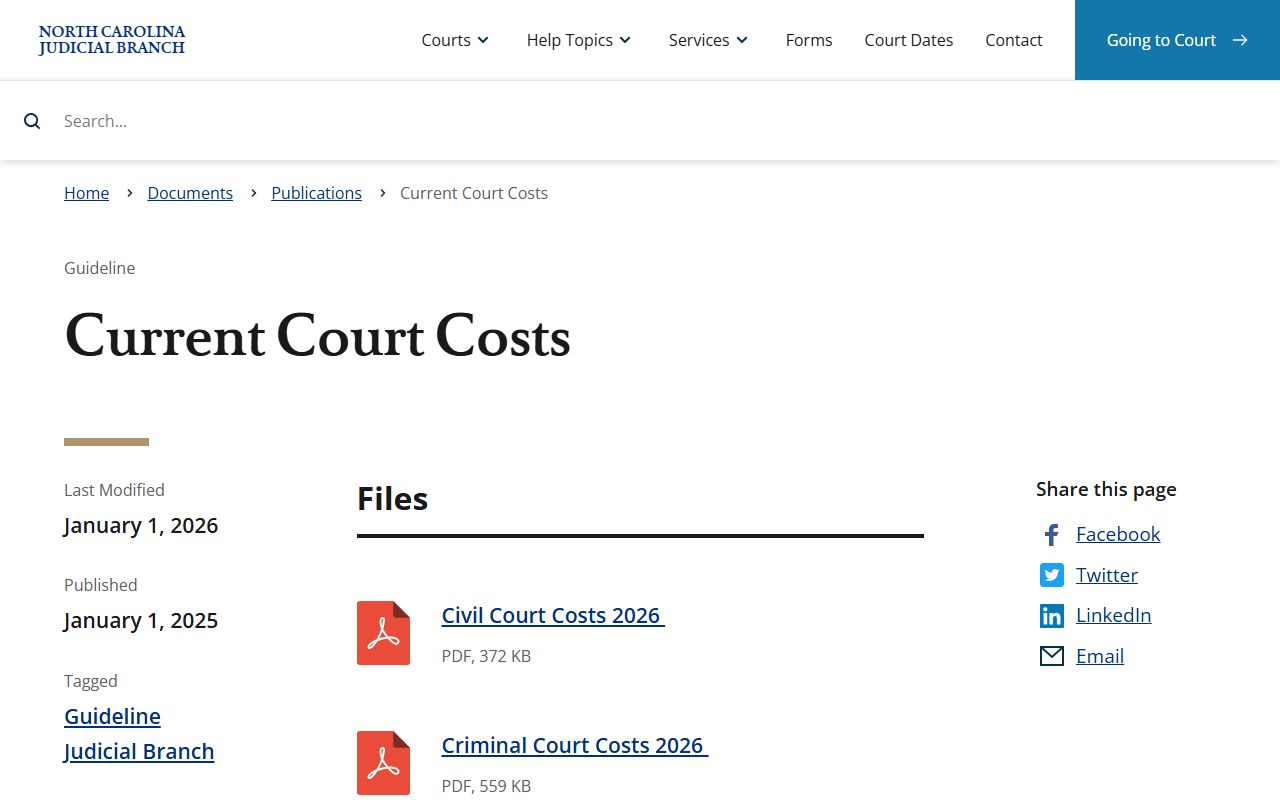
Because probate costs are statewide, Halifax County filers should rely on the current Judicial Branch schedule rather than old local fee lists.
Note: Do not send cash or personal checks by mail for court payments when the Halifax payment rules require certified funds.
What Halifax County Probate Shows
A Halifax County estate file may show the will, application or petition, affidavit, heirs and devisees, personal representative details, letters testamentary or letters of administration, inventories, accountings, creditor notices, clerk orders, receipts, and closing documents. These records help show who was appointed, what property was reported, what notices were filed, and whether the estate has closed.
Not every probate record is a full administration file. A small estate affidavit, year's allowance, or probate of will only can produce a shorter record set. Guardianship and mental-health-related records may include added confidentiality limits, so a public search result may not provide the same level of detail that appears in an ordinary estate administration file.
Halifax County Probate Process
The common process starts by deciding whether the decedent was domiciled in Halifax County or had property there. The filer then contacts or visits the Clerk of Superior Court, selects the correct estate path, files the will or death documents and required AOC forms, and waits for letters or clerk orders if the filing is approved.
Estate flow: Death and county connection › Clerk filing › Estate path selected › Letters or clerk order › Inventory and notices › Accounting and distribution › Closing.
Bankruptcy is separate from Halifax County probate. If estate property, creditor claims, or a debtor case raises federal bankruptcy issues, records are handled through the U.S. Bankruptcy Court for the Eastern District of North Carolina, not through the Halifax estate file.
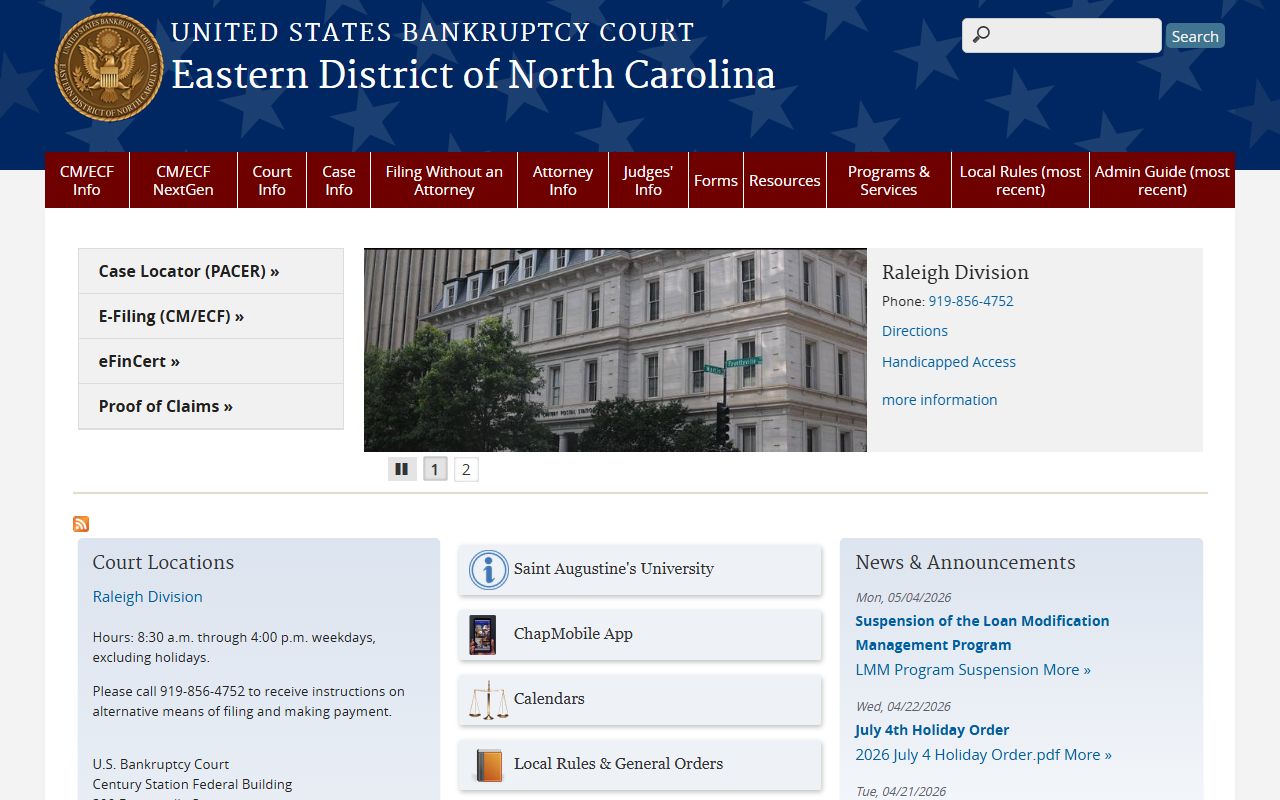
The bankruptcy court image is included because federal bankruptcy records are a separate channel when an estate question crosses into federal debtor or creditor proceedings.