
Halifax County Arrest Records and Court Charges
Halifax County arrest records document the law enforcement side of an event: an arrest, booking, custody status, or jail-related charge and bond information. Those records are separate from the formal court charge record. After an arrest, citation, summons, warrant, or indictment, the State may file or pursue charges in District Court or Superior Court. The court-facing charge record is tracked through the case, while the arrest or booking record is tied to the Sheriff's Office and Detention Center.
Current custody, booking, and charge or bond questions may require the Detention Center. The research file documents a charge/bond phone fallback at 252-583-3081 when the caller has the inmate's full name. For the full court case, including pleas, motions, disposition, and sentence, use Halifax County criminal court records. For the broader case system, use Portal and the Clerk of Superior Court.
Find Halifax County Arrest Records
Start by deciding whether the need is custody information or court charge information. For custody and booking, the Halifax County Sheriff's Office and Detention Center channels are the local route. For court charges after arrest, search the North Carolina eCourts Portal by defendant name or case number, then use the clerk for full files and certified copies. If a person is in custody, jail charge information can help identify the court case, but the court docket is still the better source for charge status and disposition.
- Use the Sheriff's Office or Detention Center route for current custody, booking, charge, and bond questions.
- Use eCourts Smart Search for the court case by defendant name or case number.
- Filter to Halifax County when Portal returns statewide matches.
- Open the case and read each charge, count, status, hearing, and disposition field.
- Use the Clerk of Superior Court for full paper files, official copies, and background-check-style searches.
- Use NCDAC resources only for state prison, probation, parole, or other state correctional records.
The Halifax County government sheriff page is one of the assigned image sources for arrest records and charges.
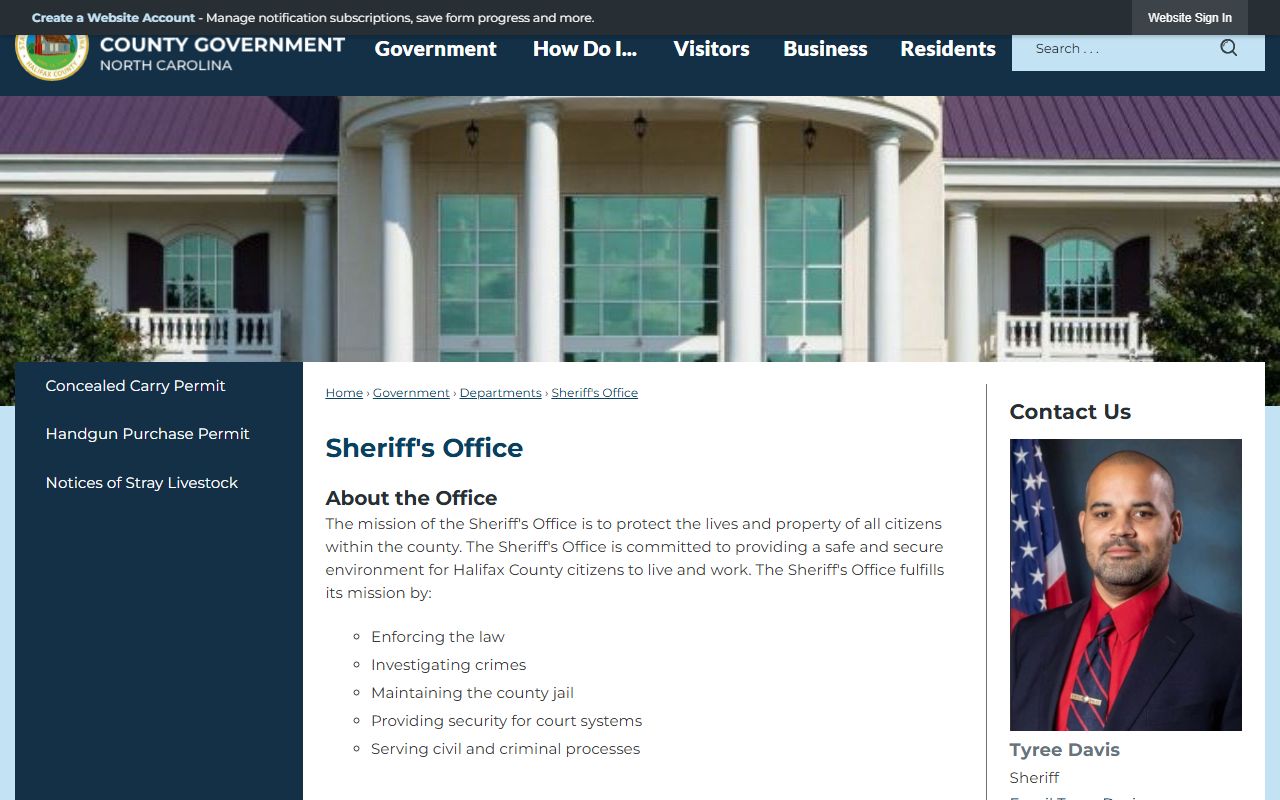
That office is the local law enforcement channel, while court charges and dispositions remain court records.
Charges After Arrest Documents
Court charges after arrest can enter the file through more than one document path. North Carolina criminal cases may involve a warrant, criminal summons, citation, magistrate process, indictment, or other charging paper depending on the offense and stage. The District Attorney's role is central because prosecutors decide how charges proceed, negotiate pleas, prepare trial dockets, and represent the State in District and Superior Court.
| Document | Who Uses It | What It Does |
|---|---|---|
| Complaint or Magistrate Process | Law enforcement, complainant, magistrate, or prosecutor process | Begins or supports a criminal charge and may connect to warrant, summons, or bond action. |
| Information | Prosecutor | Formal charge document used by the State when allowed by procedure. |
| Indictment | Grand jury and prosecutor | Formal felony charging document commonly tied to Superior Court prosecution. |
The Prosecutorial District 7 District Attorney page is assigned to this record type.
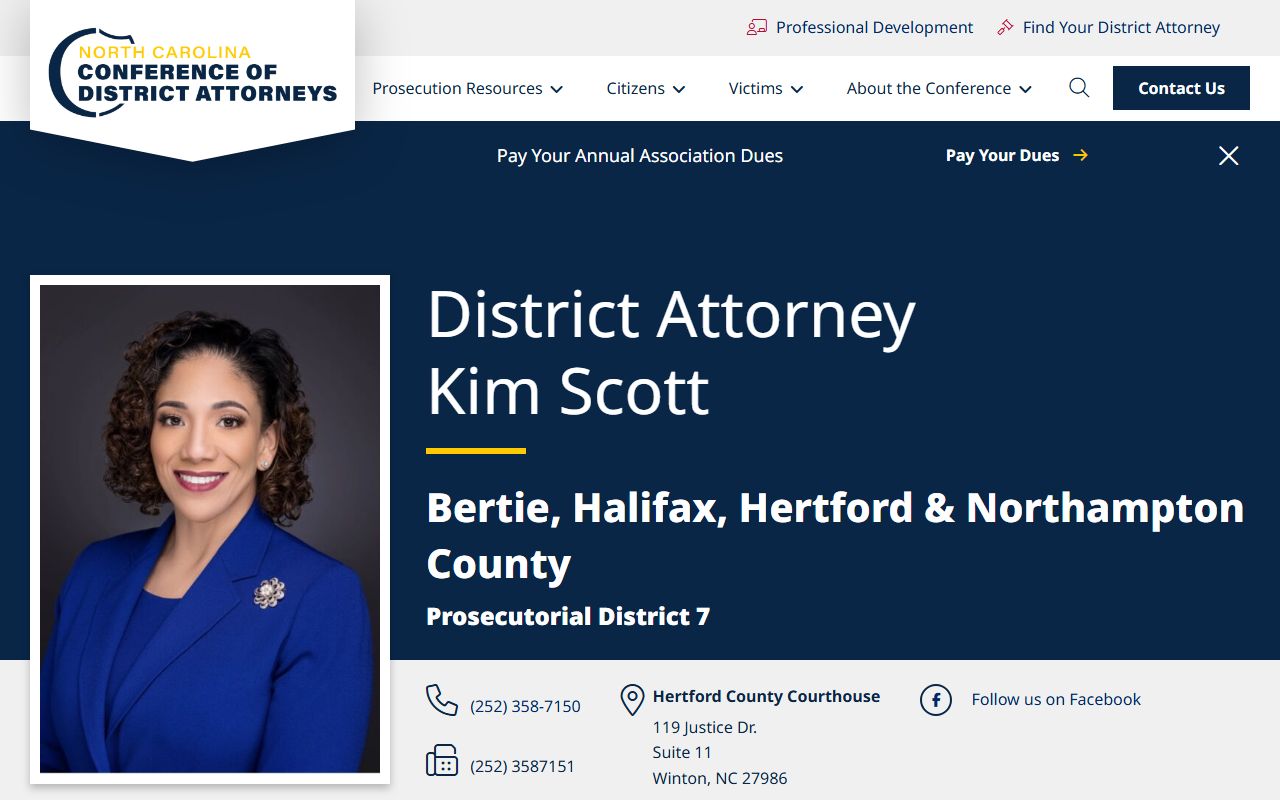
That source supports the distinction between an arrest by law enforcement and charge decisions made in prosecution.
Halifax County Charge Status
A charge status is not fixed just because it appears after arrest. A prosecutor may amend a charge, reduce it, dismiss it, add another count, or proceed to plea or trial. A judge may enter orders that affect the case. The final result is found in the disposition and judgment entries, not merely in the original charge label. Read each count separately when a case lists more than one offense.
| Status | What It Means |
|---|---|
| Pending | The charge remains open and has not reached final disposition. |
| Amended | The charge wording, statute, level, or count may have changed from the original filing. |
| Reduced | The State or court record reflects a lesser charge or lower offense level than first alleged. |
| Dismissed | The charge ended without conviction on that count, subject to the exact docket entry. |
| Disposition Entered | The court has recorded an outcome such as guilty, not guilty, dismissed, or another final result. |
Charges vs Convictions
A charge is an accusation. A conviction is an outcome. Halifax County arrest records may show charge information soon after booking, but that does not mean the person was convicted. Court charge records can later show reductions, dismissals, pleas, verdicts, or sentencing. This distinction is one of the most important parts of reading court charges after arrest.
| Point | Charge | Conviction |
|---|---|---|
| Meaning | Accusation or filed offense | Final guilt or responsibility finding |
| Timing | Appears after arrest, citation, summons, warrant, or indictment | Appears after plea, verdict, or judgment |
| Can Change | May be amended, reduced, dropped, or dismissed | May be appealed or affected by later legal relief |
| How to Check | Read charge list and status | Read disposition, judgment, and sentence |
Charge Codes and Severity
Charge entries usually tie an accusation to an offense description, severity level, and case path. In Halifax County, misdemeanors and infractions are generally District Court matters, while felony trials are Superior Court matters. A single arrest can produce several charges. Each charge can have its own status, court date, disposition, and sentence term. If charge-level data looks incomplete online, the Clerk of Superior Court is the official source for the court file.
District Attorney and public defense contacts can be relevant after charges are filed. Halifax County is in Prosecutorial District 7, and the current DA Conference listing identifies District Attorney Kim Scott. NC Indigent Defense Services lists Halifax in Defender District 7 and identifies a Public Defender Office covering Bertie, Halifax, Hertford, and Northampton counties.
The NC IDS Halifax listing is assigned to this arrest and court-charge topic.
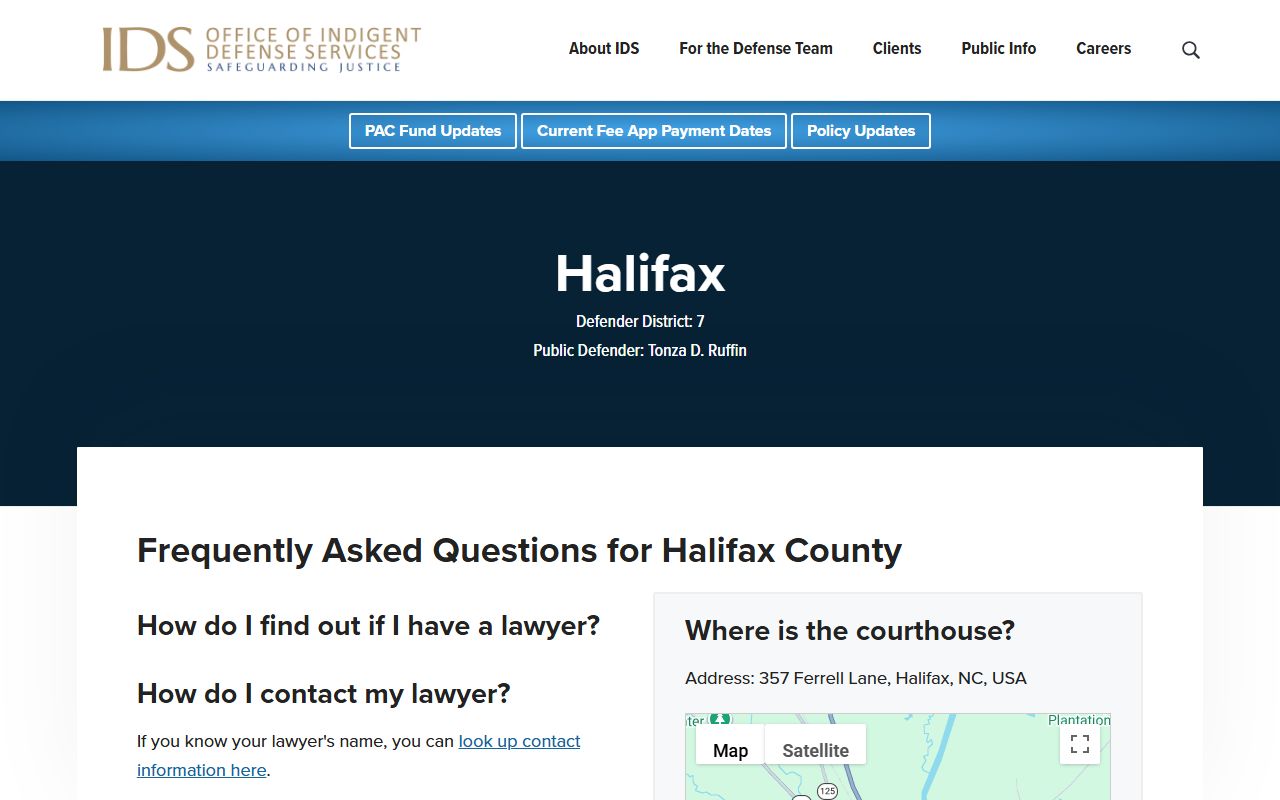
Defense-office information is separate from public record lookup, but it helps explain the local criminal-case process after charges are filed.
Sealed vs Expunged Charges
Sealed and expunged charge records are not ordinary public lookup results. Sealing restricts access by statute or court order. Expunction is a statutory process that can remove, seal, or destroy eligible public record entries after the court grants relief. A dismissed charge may still appear in public systems unless an expunction or other legal limit applies. Juvenile charges, sealed indictments, and investigative records may also be withheld.
| Point | Sealed | Expunged |
|---|---|---|
| Access | Restricted from ordinary public view | Removed or treated as unavailable under the order and statute |
| Cause | Court order, statute, juvenile rule, or confidentiality law | Granted expunction petition for an eligible arrest, charge, or conviction |
| Search Result | May be hidden or partially shown | Should not appear in ordinary public searches after processing |
| Where to Ask | Clerk of Superior Court | Judicial Branch expunction forms and clerk filing process |
Statewide Charge and Custody Records
Statewide correctional records are different from Halifax County arrest records and court charge records. NCDAC offender resources may show state prison, probation, parole, and historical state correctional information, but they do not replace the county jail or the court case file. NC SAVAN and VINE provide custody and case-notification services. The Sheriff's Office also links to public-safety tools such as sex offender registry resources and tip channels, but those tools are not a personal warrant-clearance or court-charge lookup.
The Judicial Branch announcement about the District 7 Public Defender Office gives local context for charge defense after filing.
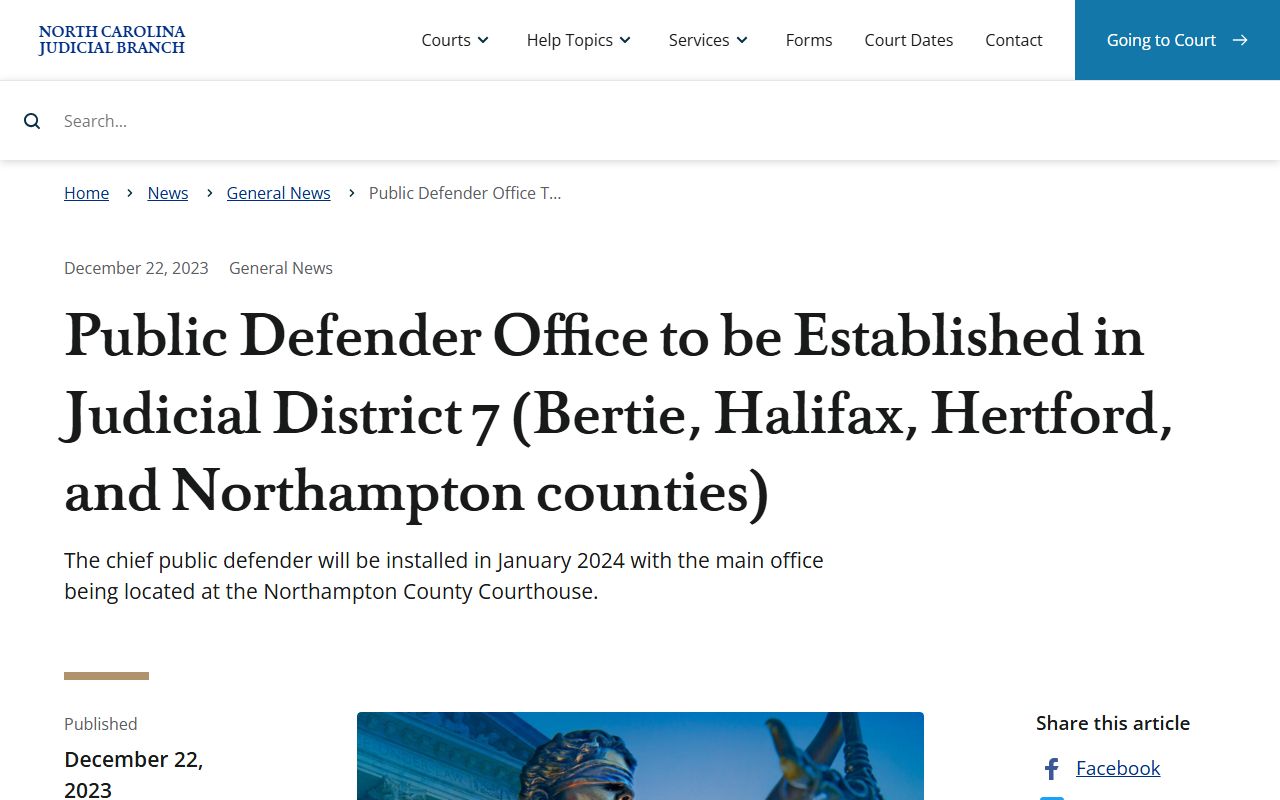
That source gives local context for representation in Halifax County criminal matters after charges are filed.
Restricted Halifax Arrest Records
Public access limits depend on the record type. Returned warrants and some criminal process may be public unless sealed, but active investigative records, unserved warrants, law enforcement intelligence, body-camera recordings, and juvenile matters have separate limits. North Carolina law treats law enforcement investigative records differently from court records. Body-camera and other agency recordings also have special disclosure rules and are not ordinary public records.
For practical access, separate the request by office. Ask the Sheriff's Office or Detention Center about custody, booking, and jail charge or bond information. Ask the Clerk of Superior Court about the court case, filed charges, docket, disposition, official copies, and expunction-related filing paths. Ask the District Attorney or defense counsel about case communications only when you are a party, victim, witness, defendant, or attorney with a proper reason to contact them.
Important: A charge after arrest is not a conviction; confirm the final disposition before relying on a result.