
Search Halifax County Court Records
The main online access point for Halifax County court records is the North Carolina eCourts Portal. Halifax County joined eCourts in Track 8 on April 28, 2025, so Portal tools now cover online case lookup, hearing searches, payments, and judgment search for local state-court matters. The Portal requires JavaScript and cookies, and Tyler's public access screen uses a CAPTCHA challenge every ten minutes for anonymous, registered, and elevated users. If a search result is not enough, the official fallback is the Clerk of Superior Court for the county where the case was filed.
Use Portal Smart Search for case number and name searches. Use Search Hearings when the goal is a court date or calendar entry rather than a full case lookup. Public self-service terminals at clerk offices remain important for criminal, civil, special proceeding, and estate case information, and paper files are inspected at the clerk's office where the case is located.
- Open the eCourts Portal and choose Smart Search for a case lookup.
- Enter a case number or a party name in last, first middle suffix format.
- Use advanced filters to narrow results to Halifax County when statewide matches appear.
- Check case type, case status, and file-date filters if the name is common.
- Use Search Hearings separately for court dates, courtroom details, or calendar activity.
- Contact the Halifax Clerk of Superior Court for paper files, certified copies, older files, and background-check-style searches.
The Judicial Branch court records help topic gives the statewide context for public case access. Its court records help page is one of the source pages used for Halifax County court records access.
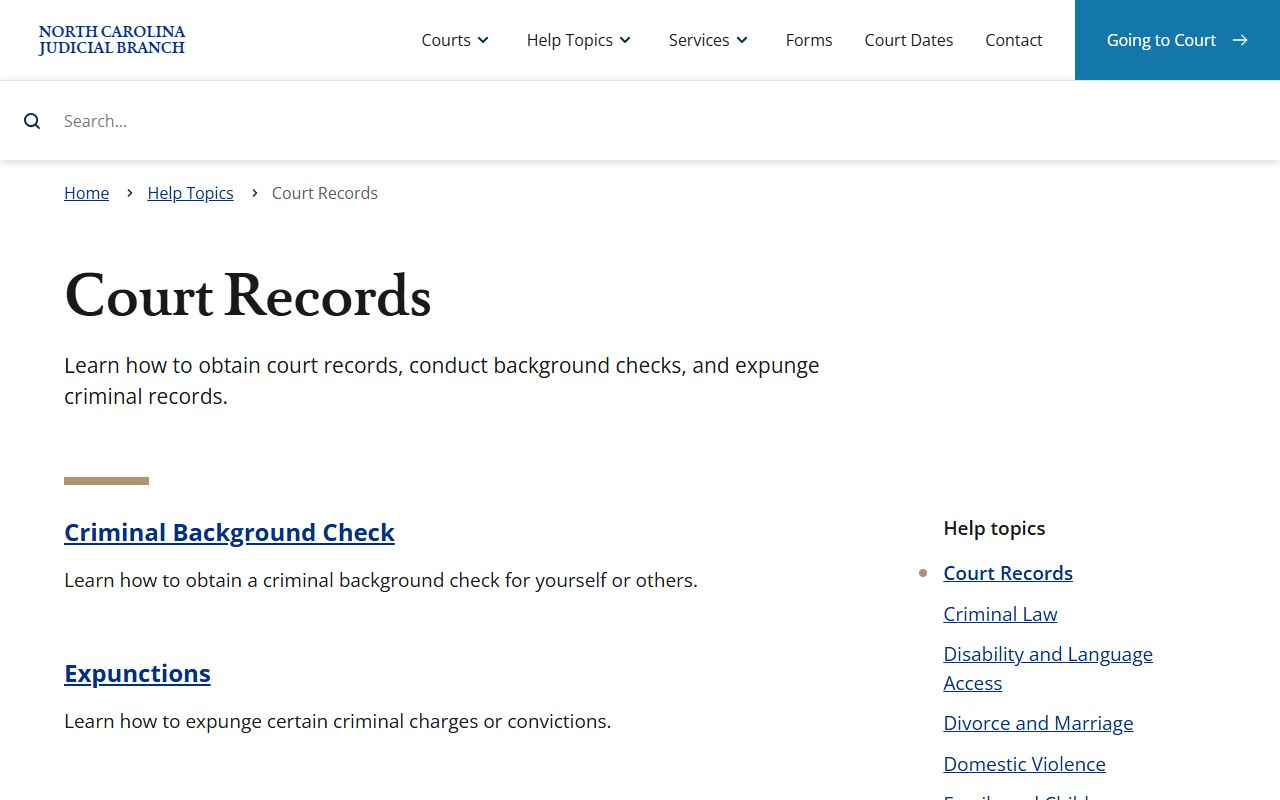
That source matters because Halifax County uses the statewide Judicial Branch system rather than a separate county court-records database.
Halifax County Court Records Search Fields
Smart Search works best when the user starts broad enough to catch the record, then narrows the result set. A case number is usually the cleanest route. A name search can work, but the Portal instructions require specific wildcard patterns when the full name is not known. Advanced filters are useful in Halifax County because the Portal can return statewide matches, and many names may appear in more than one county or case type.
| Field Label | Type | Required | Notes / Format |
|---|---|---|---|
| Record Number or Name | Text | One input required | Case number accepted; names use last, first middle suffix format. |
| Last Name / First Name | Text | Required for party-name mode | Name wildcard needs at least three last-name characters plus * and at least one first-name character plus *. |
| Middle Name / Name Suffix | Text / Dropdown | No | Useful for common names; suffix must be a valid Portal option. |
| Filter by Location | Dropdown | No | Select Halifax County to avoid statewide false matches. |
| Filter by Search Type | Dropdown | No | Party name, nickname, business name, or sounds-like options may be available. |
| DOB, Gender, Ethnicity | Date / Dropdown | No | Use only when known and relevant to the case search. |
| Case Type / Case Status | Dropdown | No | Narrows civil, criminal, estate, family, or other case groups. |
| File Date Start / End | Date | No | Helps separate older and newer Halifax County court records. |
Halifax County Court Record Types
Halifax County court records are split by court function, not by a private county database. Superior Court handles felony criminal matters, civil cases over $25,000, higher trial matters, some appeals, and contested estate caveats when they arise. District Court handles misdemeanors, infractions, traffic, family, juvenile, small claims, eviction, and magistrate-related matters. Estate and probate work is handled by the Clerk of Superior Court, who serves as probate judge for most estate proceedings in North Carolina.
- Criminal court records show charges, appearances, pleas, hearings, dispositions, judgments, and sentence or probation terms when public.
- Civil court records show complaints, answers, motions, orders, judgments, liens, and docket history.
- Family and divorce files may include custody, support, domestic violence protective orders, and divorce judgments, with some sensitive parts restricted.
- Estate records may include wills, applications, affidavits, letters, inventories, accountings, orders, and notices.
- Small claims and summary ejectment files are magistrate-level court records with shorter timelines and smaller document sets.
- Traffic court records are District Court records and differ from NCDMV driver records.
For records outside the courts, use the correct agency. The Register of Deeds handles marriage licenses, marriage certificates, land records, birth records, and death records. The Sheriff's Office handles jail, booking, service, and law enforcement records. Driver history comes from NCDMV, not from the Halifax County court file.
What Halifax County Court Records Show
A Halifax County court record may be a short docket entry or a fuller file. Portal case information and hearing lookup help identify the case, but the clerk's paper file remains the fuller channel for many documents. Court records can include party names, attorney names, charge or claim descriptions, hearing dates, courtroom or session details, motions, orders, judgments, disposition, sentence or probation data, court costs, fines, bond details, and docket-event history.
| Field | What It Shows |
|---|---|
| Case Number | The court-assigned identifier used to search, track, and request the file. |
| Court Division | Whether the matter is in Superior Court, District Court, small claims, estate, or another trial-court track. |
| Filing Date | The date the case, charge, claim, petition, or proceeding was opened. |
| Parties | Names of plaintiffs, defendants, petitioners, respondents, or criminal defendants. |
| Events and Hearings | The docket history, scheduled hearings, continuances, filings, and court actions. |
| Orders and Judgments | Judge or clerk decisions, final outcomes, enforceable judgments, and case disposition. |
| Financial Terms | Costs, fines, fees, restitution, or payment status when public and applicable. |
Public Access for Halifax County Court Records
North Carolina's access framework begins with Chapter 132 of the North Carolina General Statutes, the state public records law. Court-file access also depends on clerk recordkeeping rules, including N.C.G.S. 7A-109, which addresses court records, files, dockets, indexes, and public inspection unless another law restricts access. In practice, Halifax County users should start with Portal for basic public case information, then use the Clerk of Superior Court for full files, certified copies, background-check-style searches, and records that are not visible online.
Official Judicial Branch guidance separates court documents from administrative public records. The Judicial Branch public records request page says court documents should be requested through the clerk where the case was filed, not through the statewide administrative request process. That distinction matters in Halifax County because a request for a case file, judgment, docket, or certified copy belongs with the Clerk of Superior Court.
Note: Portal is useful for lookup, but official copies and full file review still run through the clerk.
The public records law source is also assigned to Halifax County court records in the image manifest.
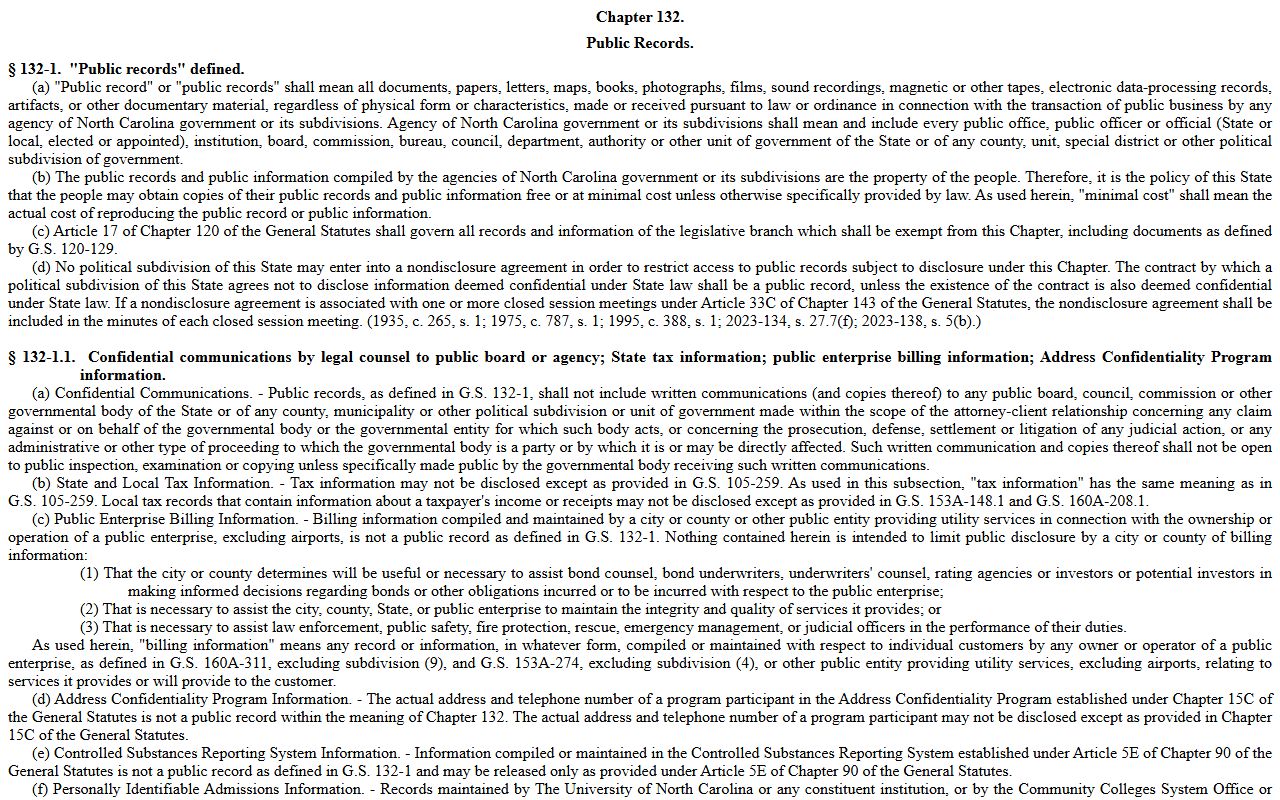
Use that law as a starting point, but apply the court-specific limits that control sealed, juvenile, expunged, and confidential records.
Restricted Halifax County Court Records
Not every file that reaches a courthouse is open to ordinary public inspection. Juvenile delinquency, abuse, neglect, dependency, adoption, mental-health, sealed, and expunged records have added limits. Personal identifiers such as Social Security numbers, financial account numbers, and protected minor information may be redacted. Law enforcement investigative records are also distinct from court records and may be withheld under separate rules.
North Carolina's juvenile record rules are especially important for Halifax County court records. N.C.G.S. 7B-3000 says juvenile records maintained by the clerk are not inspected like adult criminal court files. Abuse, neglect, and dependency records have additional confidentiality protection under Chapter 7B. Expunction is separate: if a court grants the right petition, agencies may be directed to remove, seal, or destroy covered public entries.
The Judicial Branch source on obtaining records explains where to request different categories of court files.
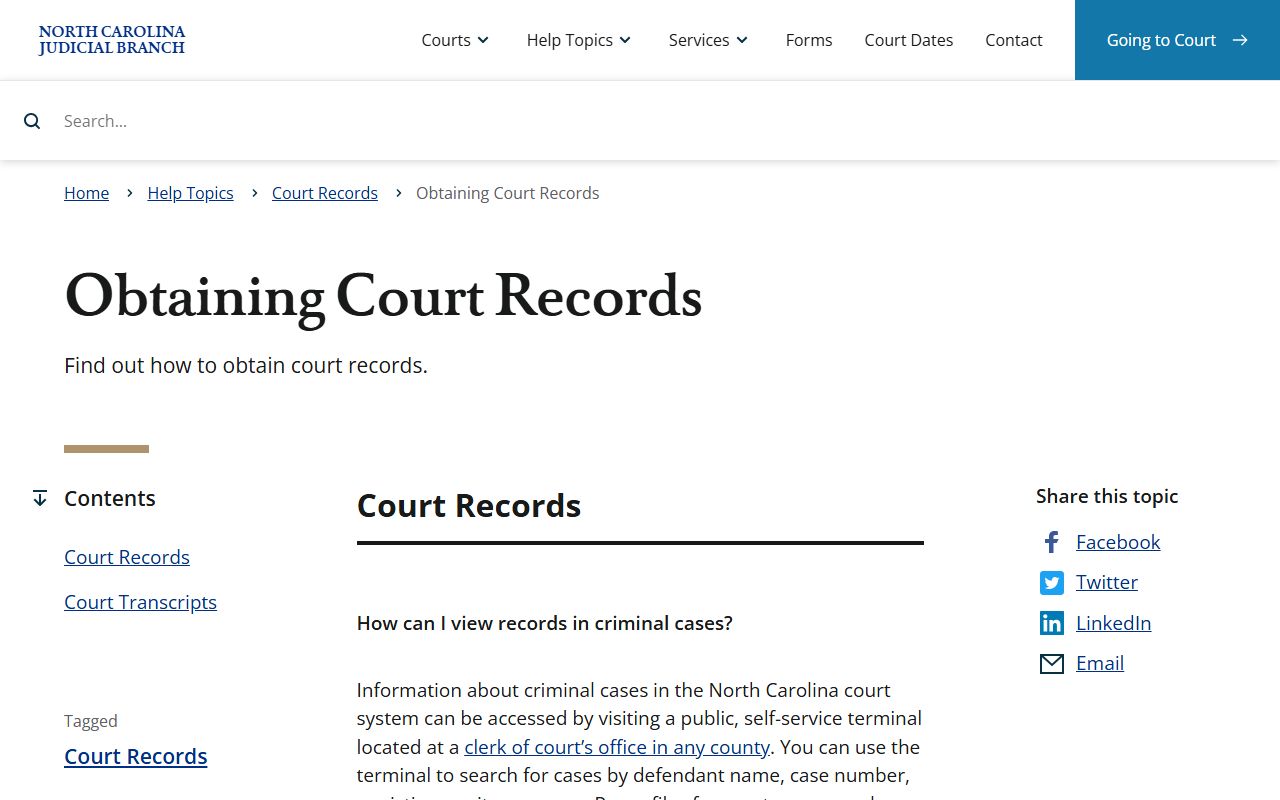
That source is useful when deciding whether to use Portal, a public terminal, the Halifax Clerk of Superior Court, or another agency.
The juvenile statute source is also assigned to this record type.
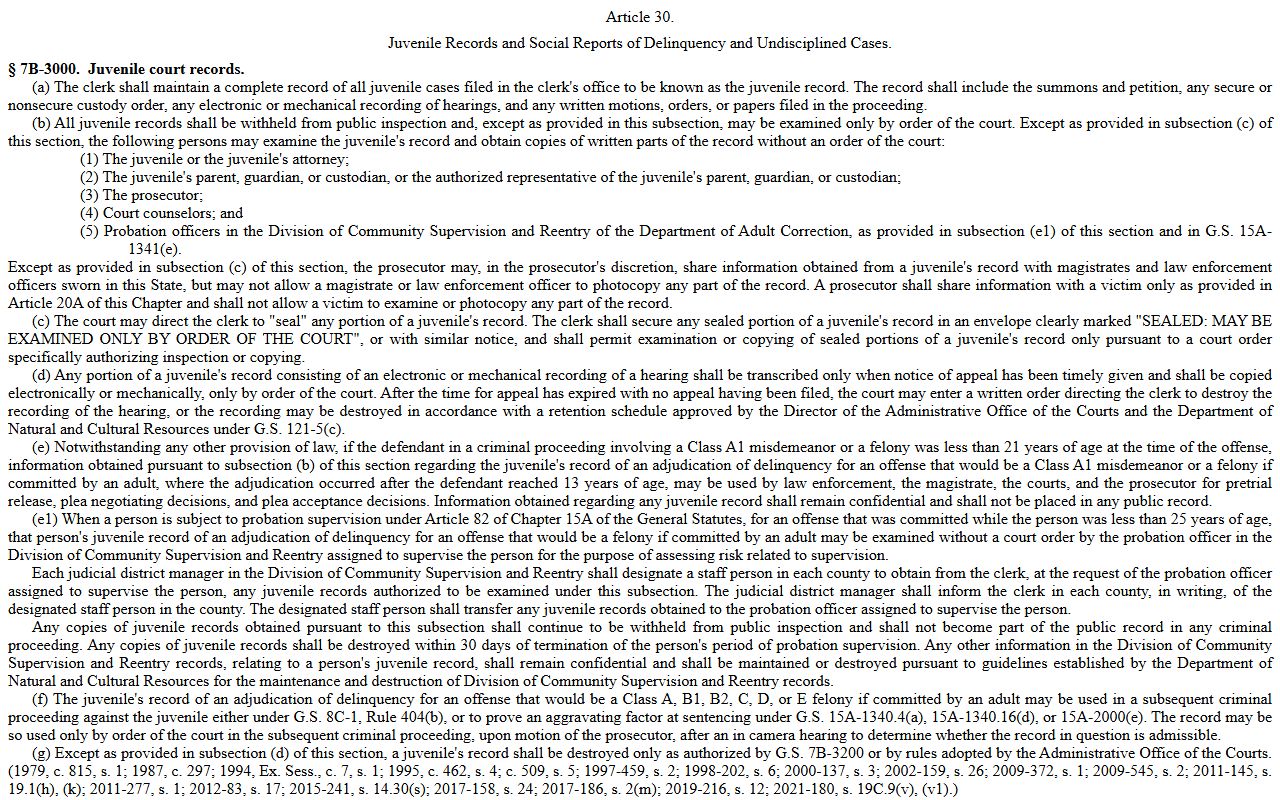
Juvenile limits are a core reason that a missing online result should not be treated as proof that no case or proceeding exists.
Halifax County Court Records at the Clerk
The in-person route is the Halifax Clerk of Superior Court at the active courthouse. Bring a case number, party name, citation number, or other clear identifier when possible. Official guidance says criminal, civil, special proceeding, and estate case information can be searched on public self-service terminals in clerk offices. Paper files for Halifax County cases are inspected at the Halifax clerk's office, and clerk staff can provide copies for a fee.
Clerk of Superior Court
Halifax County Courthouse
357 Ferrell Lane
Halifax, NC 27839
252-593-3000
Monday-Friday, 8:30 a.m.-5:00 p.m.
Background-check-style searches should go through the county clerk's office rather than Portal, according to official Judicial Branch guidance. Certified copies, full paper files, and older records may also require clerk contact even when Portal shows a case summary.