
Halifax County Criminal Court Records
A criminal court record is the official case file maintained by the Clerk of Superior Court after a criminal charge enters court. In Halifax County, that file can include the charging document, docket events, court dates, attorney appearances, motions, orders, plea information, trial results, disposition, sentencing, costs, and probation terms when those items are public. The full case file differs from a jail booking record. Booking and current custody information belongs with the Sheriff's Office and Detention Center, while the court record belongs with the clerk.
North Carolina's trial courts divide criminal work between District Court and Superior Court. District Court handles misdemeanors, infractions, traffic, and many early criminal proceedings. Superior Court is the higher trial division and generally handles felony trials. Magistrates are part of District Court and may handle initial criminal processes and bond or release functions. A fuller explanation of the filed charges themselves belongs with Halifax County arrest records and court charges, while the criminal case file controls pleas, disposition, and sentence.
The Superior Court source assigned to Halifax County criminal court records explains the higher trial division's role.
That distinction matters because felony case records and some serious criminal outcomes are Superior Court matters.
Search Halifax County Criminal Cases
The online starting point is the North Carolina eCourts Portal. Use Smart Search for a defendant name or case number. Use Search Hearings when the goal is a criminal court date. Halifax County went live in eCourts Track 8 on April 28, 2025, so Portal tools now cover local online case lookup. For older records, background-check-style searches, paper files, and certified copies, use the Halifax Clerk of Superior Court at the courthouse.
- Open the eCourts Portal and choose Smart Search.
- Search by criminal case number or defendant name in the required format.
- Filter by Halifax County, case type, status, and filing date when possible.
- Open the case result and review charges, docket events, hearings, and disposition.
- Use Search Hearings separately to confirm a pending court date.
- Request official copies or full file review from the Clerk of Superior Court when needed.
Official Judicial Branch guidance warns that Portal is not the background-check route. Background-check-style searches should be handled through the county clerk's office. State prison, probation, and parole data are separate from the county criminal case file and may appear through NCDAC offender search resources, but those systems do not replace court records.
The District Court source explains the lower trial division's criminal and high-volume role.
Misdemeanor, traffic, and early criminal proceedings may appear in District Court before any Superior Court felony trial path.
Halifax Criminal Case Flow
A criminal court record grows as the case moves. The first public court-facing entries may be tied to a charge, summons, warrant, indictment, first appearance, bond setting, or calendar event. Later entries can show motions, continuances, plea negotiations, trial settings, verdicts, dismissals, judgments, and sentencing. One arrest can produce more than one charge, and each charge may resolve in a different way.
Case flow: Charges Filed › Arraignment › Pretrial / Motions › Plea or Trial › Disposition › Sentencing
| Stage | What Happens |
|---|---|
| Charges Filed | The State proceeds through a charging document, criminal process, citation, or indictment. |
| Arraignment / First Settings | The defendant is brought into the court process, notices are issued, and counsel issues may be addressed. |
| Pretrial / Motions | The parties file requests, seek continuances, exchange required material, or resolve legal issues. |
| Plea or Trial | The case ends by plea, dismissal, trial verdict, or another authorized disposition. |
| Sentencing | The court enters punishment, probation, costs, fines, restitution, or other lawful terms when applicable. |
What Halifax Criminal Records Show
A criminal court file should be read charge by charge. The headline charge may not match the final disposition. Some charges are amended, reduced, dismissed, or resolved by plea to a different offense. Others may remain pending while related counts end. The docket history helps place each entry in time, but the judgment and disposition fields are critical for understanding the outcome.
| Field | What It Shows |
|---|---|
| Case Number | The court identifier used for lookup, copy requests, and clerk questions. |
| Defendant | The person charged in the criminal court case. |
| Charge | The offense alleged by the State, including separate counts where listed. |
| Court Division | Whether the matter is in District Court, Superior Court, or tied to magistrate activity. |
| Plea | The defendant's formal response, when entered and public. |
| Disposition | The outcome, such as guilty, not guilty, dismissed, or another case-ending result. |
| Sentence | Probation, custody, fines, costs, restitution, or other terms when public. |
| Docket Events | Hearings, motions, continuances, orders, notices, and judgment entries. |
Charges vs Convictions
A charge is an accusation in the court process. A conviction is an outcome that follows a guilty plea, guilty verdict, or other legally recognized finding of guilt or responsibility. Halifax County criminal court records can show both, but they are not the same thing. A search result that lists a charge does not prove conviction. Always read the disposition for each count.
| Point | Charge | Conviction |
|---|---|---|
| Meaning | Accusation filed or pursued by the State | Final guilt or responsibility finding |
| Timing | Appears early in the case | Appears after plea, verdict, or judgment |
| Can Change | May be amended, reduced, added, or dismissed | Can be appealed, corrected, or affected by later relief |
| How to Read | Check offense, count, and status | Check judgment, sentence, and final disposition |
Disposition and Sentence Terms
"Disposition" means the outcome of a charge or case. Common outcomes include guilty, not guilty, dismissed, or other case-ending entries. A dismissal is not the same as a conviction. A continuance is only a postponement. A judgment is the formal court decision. Sentence information may include custody, probation, costs, fines, restitution, or supervision terms, depending on the case and what is public.
The District Attorney prosecutes criminal cases on behalf of the State in District and Superior Court. Halifax County is in Prosecutorial District 7. The DA role is important for criminal records because law enforcement may arrest or cite, but prosecutors decide how filed charges proceed, negotiate pleas, prepare trial dockets, and represent the State in criminal proceedings.
Sealed vs Expunged Records
Sealing and expunction both limit public access, but they are different. A sealed case is restricted by statute or court order. An expunction is a statutory process that can remove eligible criminal record entries from public systems after the court grants the correct petition. Eligibility depends on the charge, disposition, prior record, waiting period, and statute. Halifax County users should not assume that a dismissed charge vanishes without an expunction order.
| Point | Sealed | Expunged |
|---|---|---|
| Public View | Restricted from ordinary public access | Removed, sealed, or destroyed as directed by statute and court order |
| Cause | Statute, confidentiality rule, or judge's order | Granted expunction petition under a qualifying statute |
| Examples | Juvenile, adoption, mental-health, or sealed court matter | Eligible dismissed matters or certain nonviolent convictions |
| Next Step | Ask the clerk about access requirements | Use Judicial Branch expunction guidance and the correct AOC form path |
The Judicial Branch expunction topic is assigned to Halifax County criminal court records.
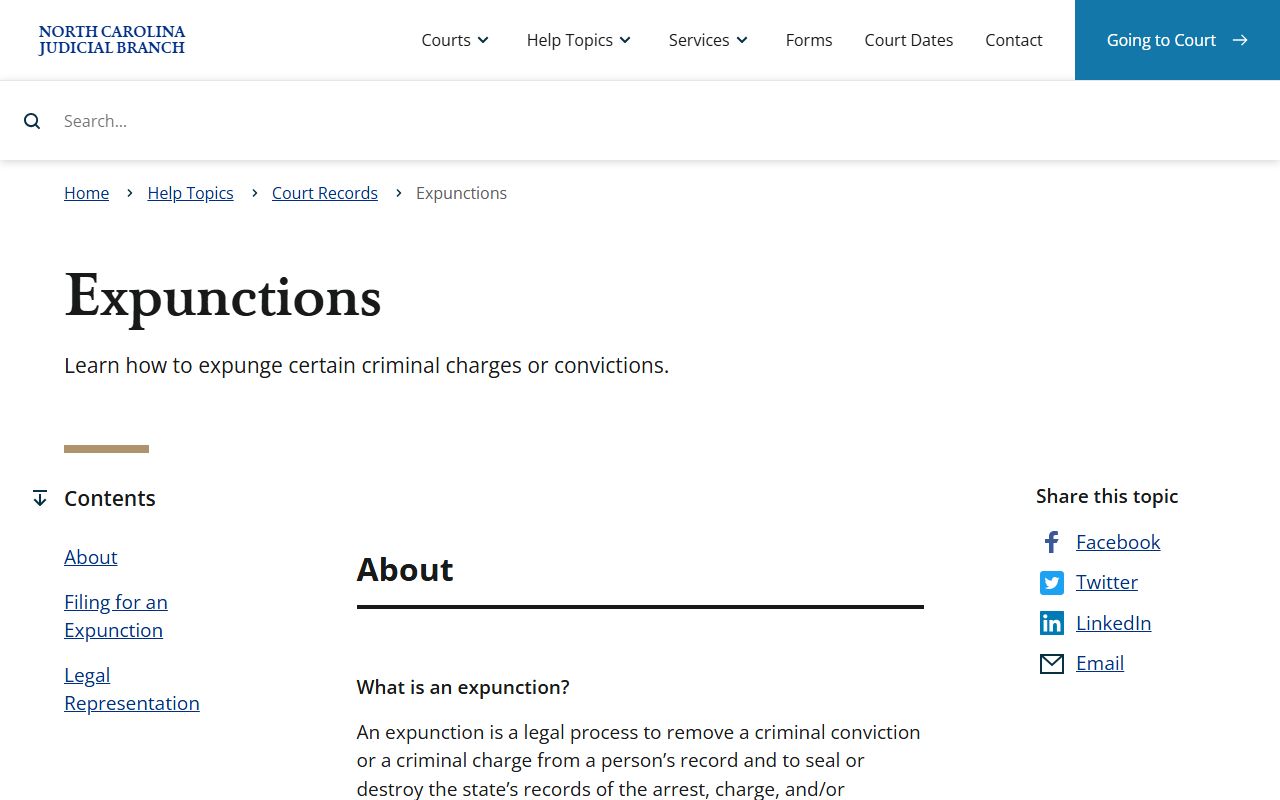
That source is the safer starting point than guessing which expunction form applies to a case.
Public Access to Halifax Criminal Records
Criminal court files are generally public unless a statute, court order, or confidentiality rule applies. North Carolina public records law and clerk recordkeeping rules support access to public court records, but law enforcement investigative records are separate. A sheriff incident report, investigative file, body-camera recording, or active investigation does not become a public court file merely because a related criminal case exists.
Key Statutes:
N.C.G.S. 15A-145.5 covers expunction eligibility for certain nonviolent misdemeanor and felony records.
N.C.G.S. 15A-153 addresses the effect of an expunction on public record entries.
The nonviolent expunction statute source is part of the successful manifest for Halifax County criminal court records.
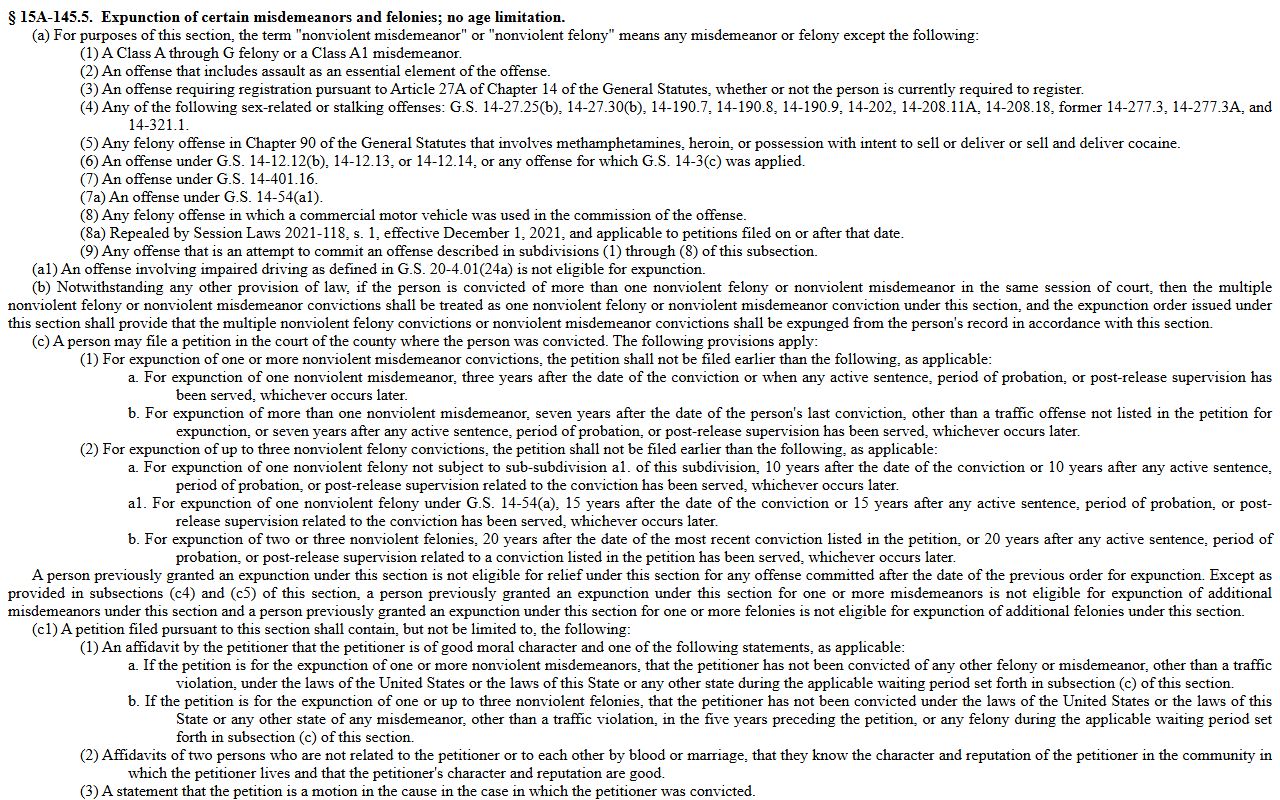
Use the statute with care because expunction rules depend on the exact case facts.
The effect-of-expunction statute explains why later public searches may change after relief is granted.
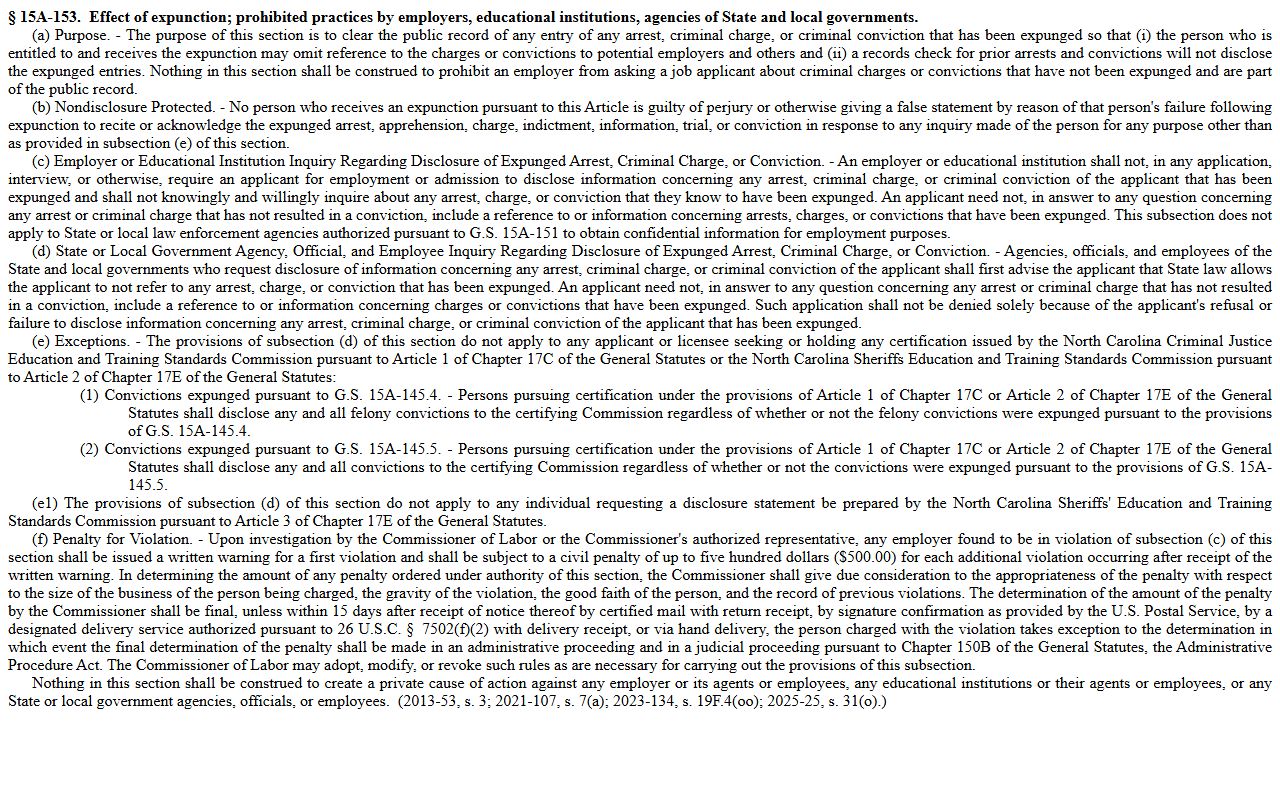
That source explains why a granted expunction can change what later public searches show.
Restricted Halifax Criminal Court Records
Juvenile records are not treated like adult criminal court records. Chapter 7B limits public inspection of juvenile court records and protects abuse, neglect, and dependency files. Sealed cases, expunged records, adoption records, mental-health proceedings, and protected identifiers may also be withheld or redacted. If a search result is missing or incomplete, restriction is one possible reason, along with spelling, county, date, and case-number issues.
The juvenile confidentiality source assigned to Halifax County criminal court records covers abuse, neglect, and dependency records.
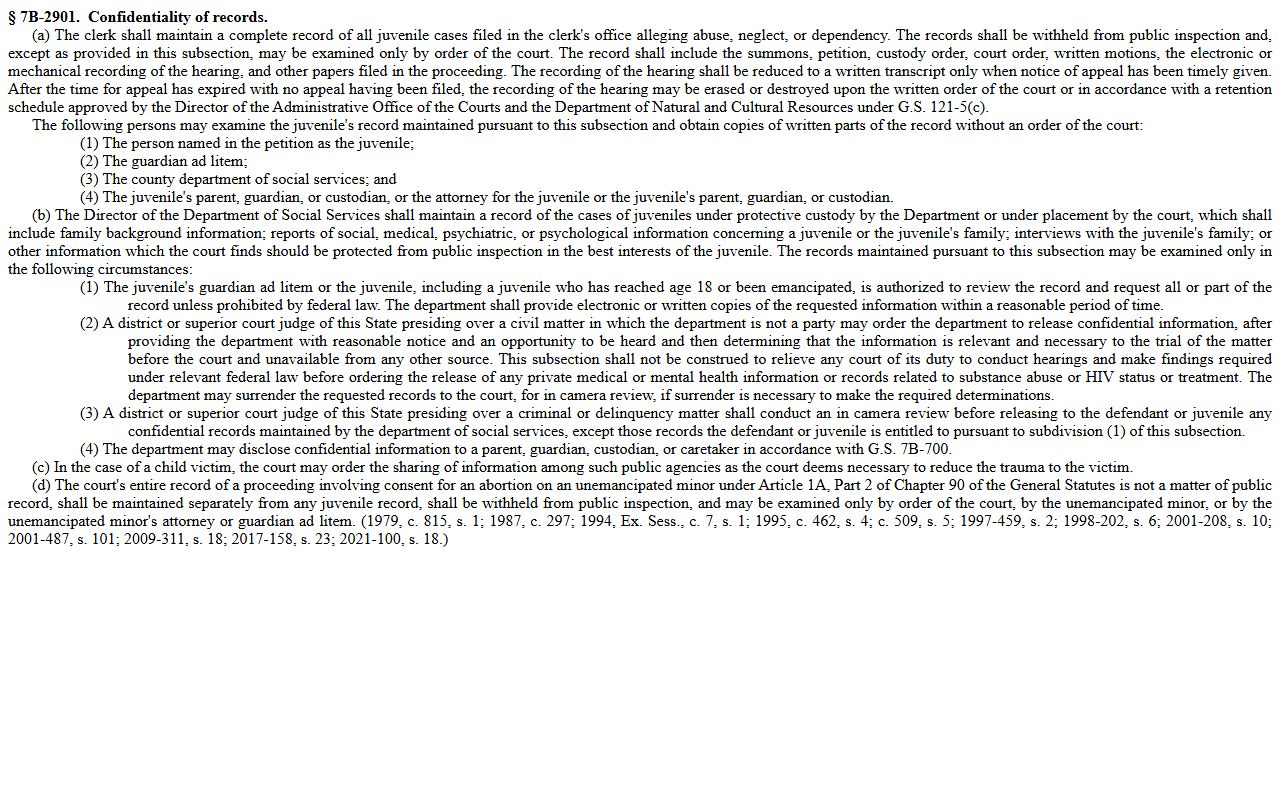
That limit is one of the clearest examples of why criminal court record searches must be read within North Carolina's access rules.